
1. Understanding the Brief
Every project starts with clarity. Before touching templates or content, I take the time to understand your business and what the website needs to achieve:
- Business goals - Are we driving leads, selling products, attracting investors, or building brand authority? The purpose shapes every decision.
- Target audience - Who the site is for, what they care about, and the actions we want them to take. A B2B services site will look very different from a consumer-facing store.
- Required functionality - From blogs and CMS collections to ecommerce or landing pages, the features must match the goals.
- Practical constraints - Timeline, budget, internal resources, and growth plans all influence the best approach.
This step sets the foundation. With a clear brief, choosing a template and shaping content becomes a strategic decision, not guesswork.
2. Choosing the Right Template
Not all templates are created equal, and not every template works for every business. I help clients choose their template from the Webflow store based on three key factors:
- Relevant sections - The template should already include layouts that fit the required content: strong hero sections, service grids, blog CMS, product displays, etc.
- Functionality - If the business needs ecommerce, CMS, or other features, the template must support that from the start.
- Visual appeal - The client should love the look and feel. Templates are highly customisable, but the base design still sets the tone.
By aligning goals, content, and functionality, we choose a starting point that accelerates development rather than creating roadblocks.

3. Planning with Content First
Great websites are driven by content, not just visuals. Once the brief is set, the next step is gathering and structuring the content provided by the client. I can also help refine it into clear, web-ready copy where needed.
- Clear hierarchy - Organising page copy into headings and subheadings for readability and SEO.
- Supporting assets - Identifying images, graphics, or videos that reinforce the message.
- Logical structure - Mapping how content naturally flows into sections and pages.
By shaping the structure around the content, we adapt the template to the copy, not the other way around. The result is a site that feels natural, easy to follow, and clearly delivers the core message.
4. Development & Brand Alignment
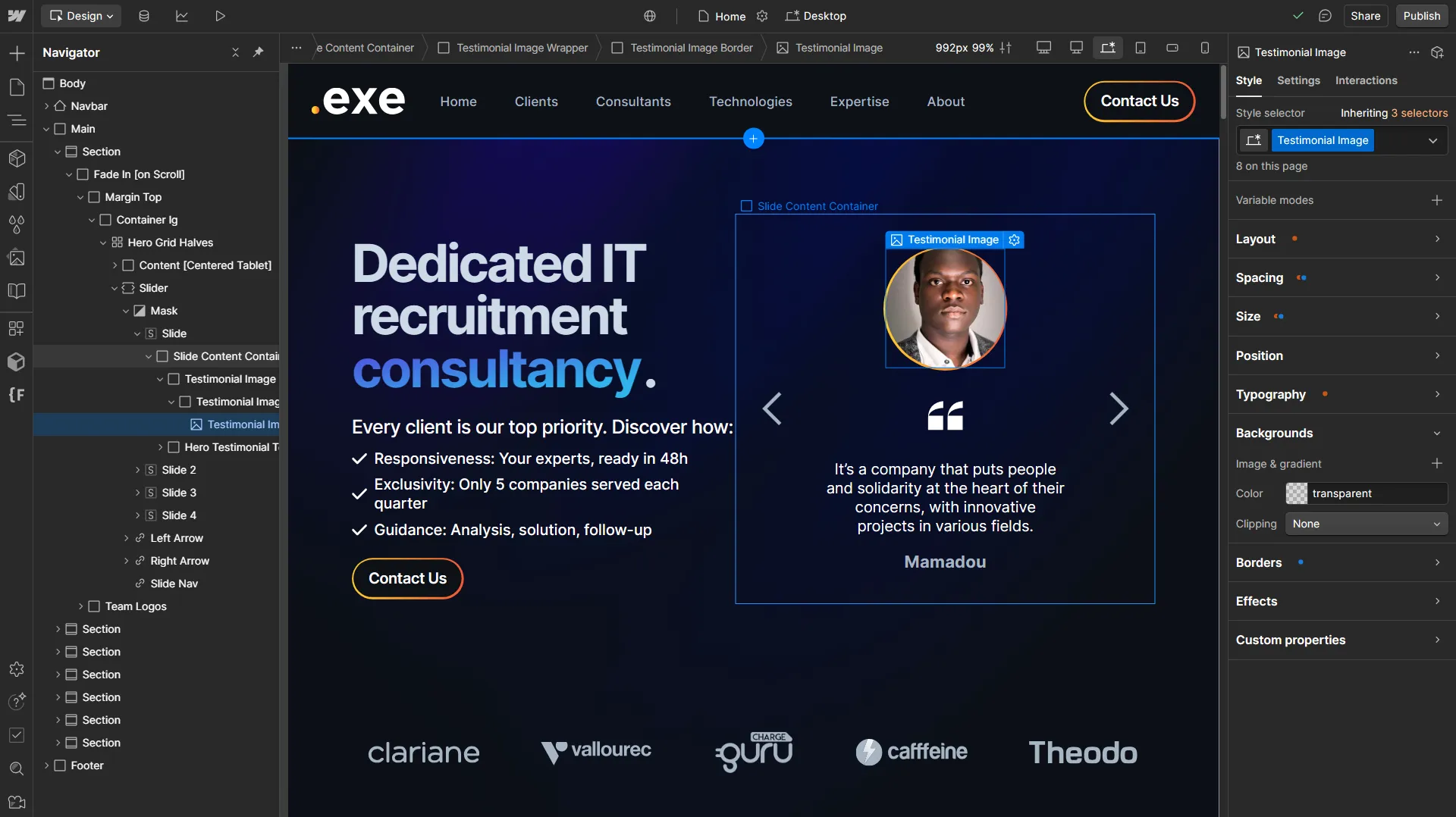
This is where the template becomes a true business website. Using the content and structure mapped out earlier, I develop the site in Webflow and apply full brand alignment:
- Brand styling - Updating colours, typography, and imagery to match brand identity.
- Custom layouts - Rearranging or adapting sections to fit the planned hierarchy.
- Extended features - Adding extra pages or components as needed.
By the end, the site doesn't feel like "a template" at all, it feels like your website.
5. Testing & SEO
Once the build is complete, the site is tested thoroughly:
- Cross-browser checks - Making sure it works smoothly on Chrome, Safari, Firefox, and Edge, across screen sizes from mobile to wide desktop.
- Performance audits - Using tools like Google PageSpeed Insights to fix issues with speed, layout stability, or accessibility.
- SEO checks - Confirming headings, metadata, alt text, and semantic structure are all in place for search visibility.
This ensures the site performs well not just visually, but in speed, usability, and search rankings too.

6. Revisions, Launch, and Training
After testing, the site is shared for client review. This stage is the client's chance to make sure everything feels just right, whether that's swapping an image, adjusting spacing, or refining a small layout detail. Because the content and structure were planned earlier, revisions are usually light, but it's still an important step to ensure the site fully reflects their vision.
Once approved, we launch by connecting the domain and making the site live. To make post-launch management easy, I also provide short training videos showing how to update text and images or create new CMS content directly in Webflow.

Conclusion
Webflow templates offer a strong starting point, but with the right process, they can be transformed into fully branded, content-driven business websites.
By combining clear planning, thoughtful development, and thorough testing, I make sure the final result is more than just a template: it's a professional site designed to grow with your business.

.webp)